
SHIVER Projects Overview
SHIVER and SHIFT have benefitted from support from several projects. Learn more about those projects below.
FRAM: Flow Response of Antarctica to Meltwater
The FRAM project combined fieldwork and remote sensing to determine whether meltwater directly affects the velocity of Antarctic Peninsula outlet glaciers, how widespread it is and how important it is on annual timescales.
FRAM is jointly funded by the UK Natural Environment Research Council (NERC) and the US National Science Foundation (NSF). NSF hosts a page about the project here. It is inspired by a paper published by the UK members of the team, (Tuckett et al., 2019).
Project Hypotheses
- H1: Short-term changes in grounded ice velocity on the Antarctic Peninsula are due to meltwater injection to the bed.
- H2: Meltwater injection to the bed results in widespread short-term velocity fluctuations around Antarctica today.
- H3: Meltwater injection to the bed results in a measurable increase in mean annual ice discharge.
The remote sensing component of the FRAM project involved automating the SHIFT processing and developing the first version of SHIVER to enable quick and easy exploration of seasonal speed changes on the Antarctic Peninsula.
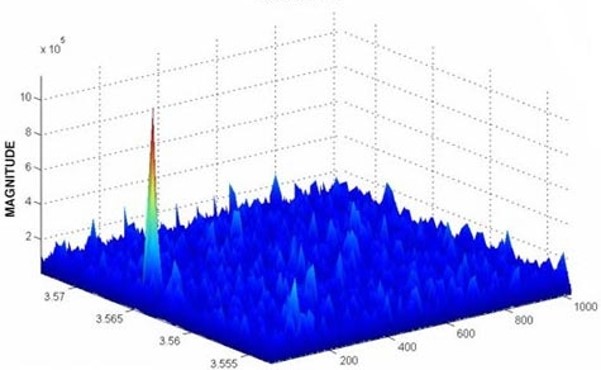
Roughness modulation of Greenland Ice Sheet hydrology and ice-flow dynamics
This project - which focused on quantifying the influence of ice surface and bed roughness on surface and subglacial meltwater routing and Greenland Ice Sheet flow - provided the kickstarter for the development of our feature tracking routine which underlies the SHIFT dataset.
You can read much more about the resulting feature tracking algorithms that were developed during and after this project in our documentation page.
SLIDE: Subglacial Lakes at Isunguata Sermia - Dynamics and Evolution
This three year project aims to determine how water is stored in lakes under the Greenland Ice Sheet, how they drain and evolve through time, and their wider impact on water drainage and the flow of ice.
In SLIDE, the SHIFT output was used to assess the ice velocity response to subglacial and ice-marginal lake drainage.